
Refugee Stories
Refugee Stories
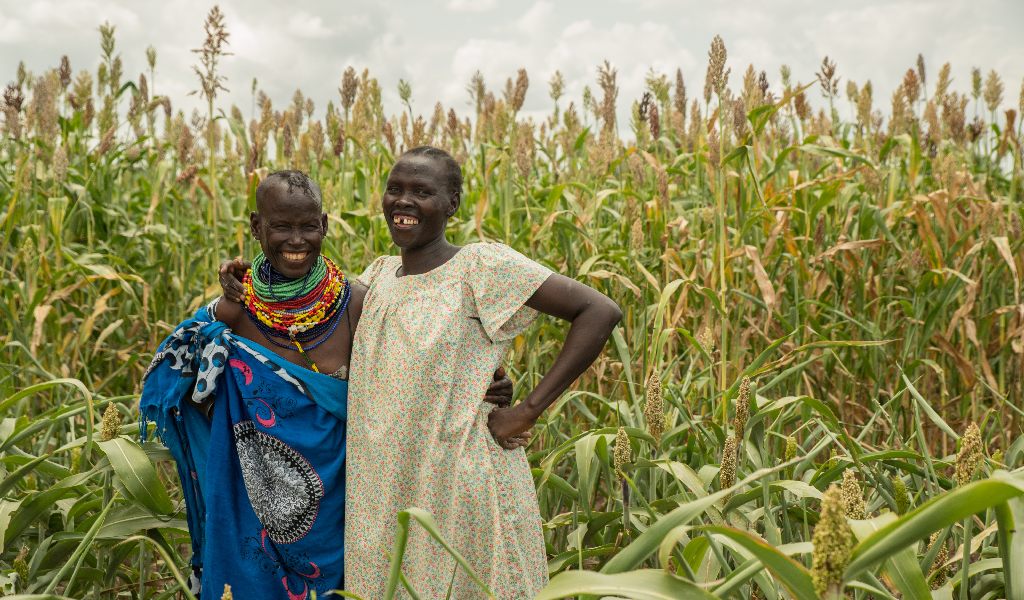
A woman from the Turkana host community (left) and her friend, a refugee from South Sudan, stand among the crops in the 180-hectare sorghum farm at Kalobeyei Integrated Settlement.
“My house is fully furnished from these,” said the Rwandan refugee, explaining how he sells his surplus melons for income, before moving on to a patch of kale.
Murenzi is one of many refugees who have embraced small-scale farming on the land behind their shelters in Turkana County’s Kalobeyei camp.
The tiny plots measure 5 meters (16.4 ft) wide and 6 meters long, and are cultivated using a method known as sunken beds.
This involves digging a hole 45 cm (17.7 inches) deep and filling it with 20 cm of top soil. The remaining soil is mixed with manure and spread on the land again, adding another 20 cm. The sunken bed technique allows the soil to hold water for longer, enabling crops to grow to full maturity. The beds harvest rainwater and are built to retain moisture, even making use of the small amounts of waste water flowing from homesteads.Rose Ibalu, a single-parent refugee from South Sudan, uses waste water to irrigate the kale and okra she plants in her garden. The $14 her family receives each month for food from the United Nations is not enough to cater for her seven children and herself, she said.
“I still need to buy charcoal to cook food, and also sugar and tea leaves which are not included in the cash voucher. The garden is my only hope for survival,” she said.
Murenzi and Tereza Mutenga, a refugee from Democratic Republic of Congo, said their limited cash income had previously forced them to exchange food rations for charcoal produced by the local community to meet their energy needs.
But Murenzi can now buy charcoal after selling the fresh produce he grows, as well as supplementing his diet with it.